

If you’re starting to follow cricket, you’ve probably heard the word “over” used a lot. It’s one of the most basic building blocks of the sport, but it completely drives how the game is played.
Let’s break down exactly what an over is and why it’s so important to the flow of the game.

1. What is an Over?
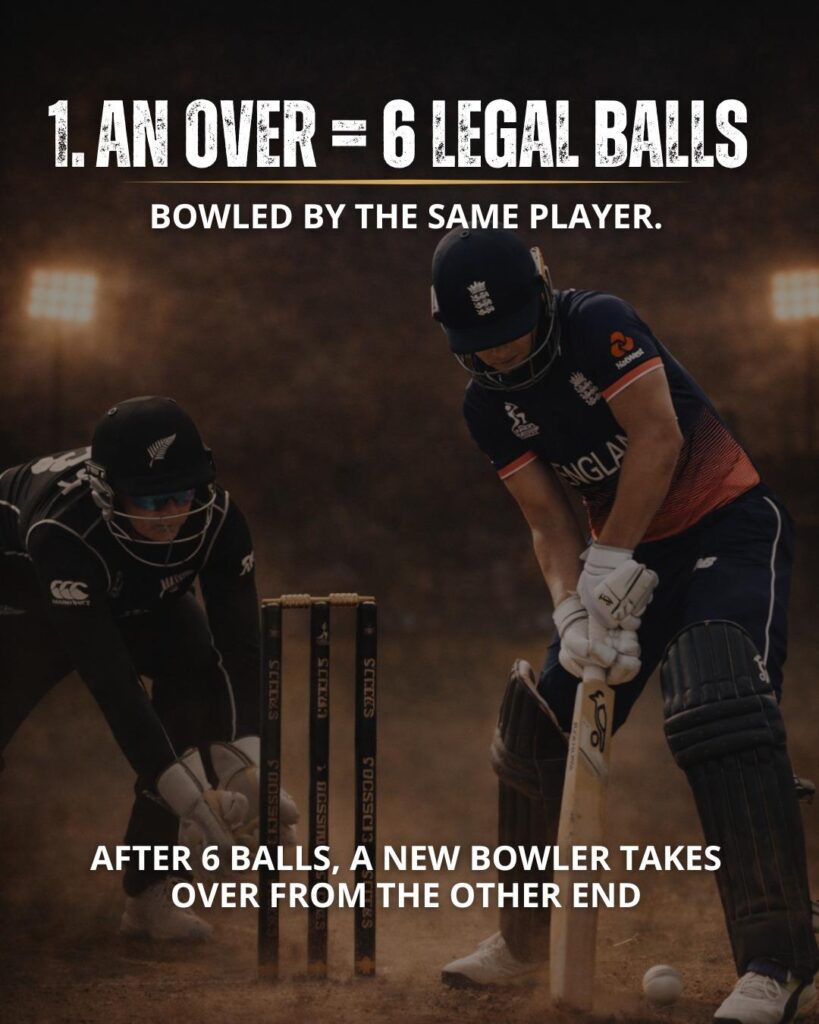
An over is simply a set of six legal pitches (which are called “balls” in cricket).
Here is how it works: one bowler is chosen to deliver all six balls in a row. Once they throw those six balls, the over is complete. After the over is done, that bowler has to take a break. A brand new bowler takes the ball for the next over, and they have to bowl from the opposite end of the pitch.
2. Why Overs Matter
Overs do a lot more than just keep track of the score. They create the actual rhythm of the match.
Because bowlers have to rotate after every six balls, the fielding captain is constantly managing their bowling strategy. They have to decide which bowler is best suited for the current situation, manage player fatigue, and try to create the hardest possible matchups for the batters. It’s a constant game of chess.

3. What Makes it Unique
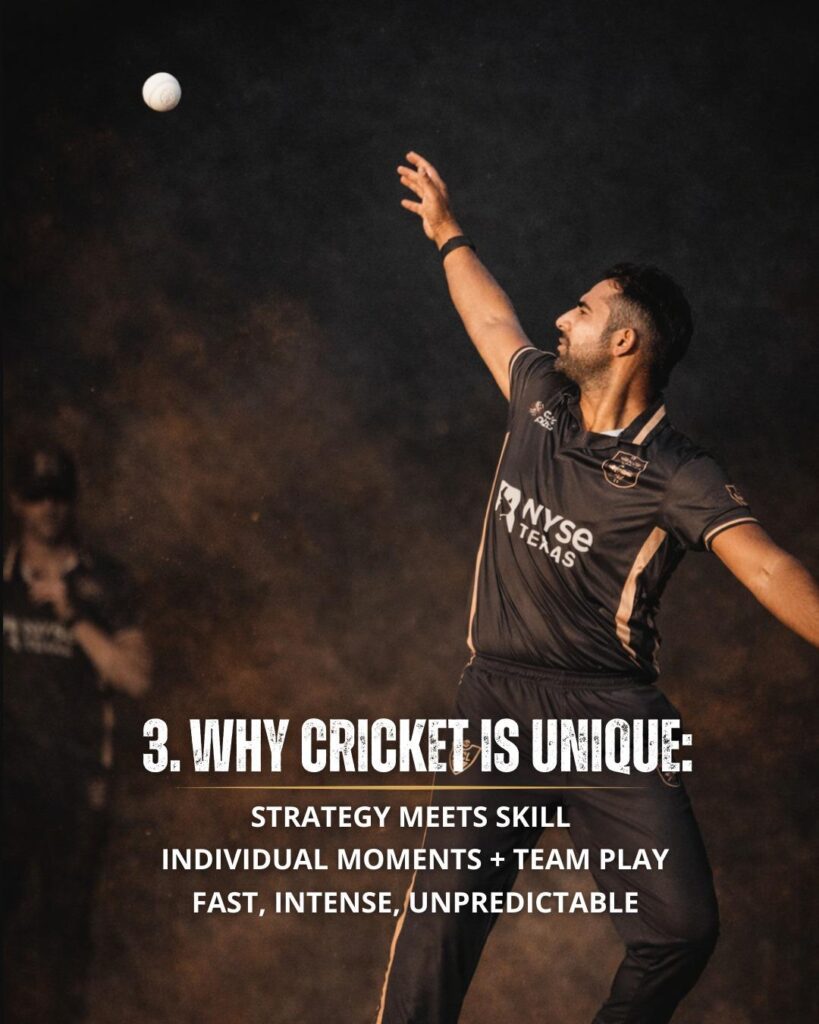
This specific structure is a big part of what makes cricket so much fun to watch. It’s a perfect mix where careful strategy meets raw athletic skill.
Every single over is like a mini-game. It highlights individual moments—just one bowler trying to outsmart one batter—but it always ties back into the larger team play. A single great over can completely change the momentum, making the sport fast, intense, and totally unpredictable.
Watch it in Action
The next time you tune into a game, pay close attention to the end of an over. Watch how the field shifts, how the new bowler warms up, and how the strategy changes every six balls. You’ll see the game in a whole new way!